
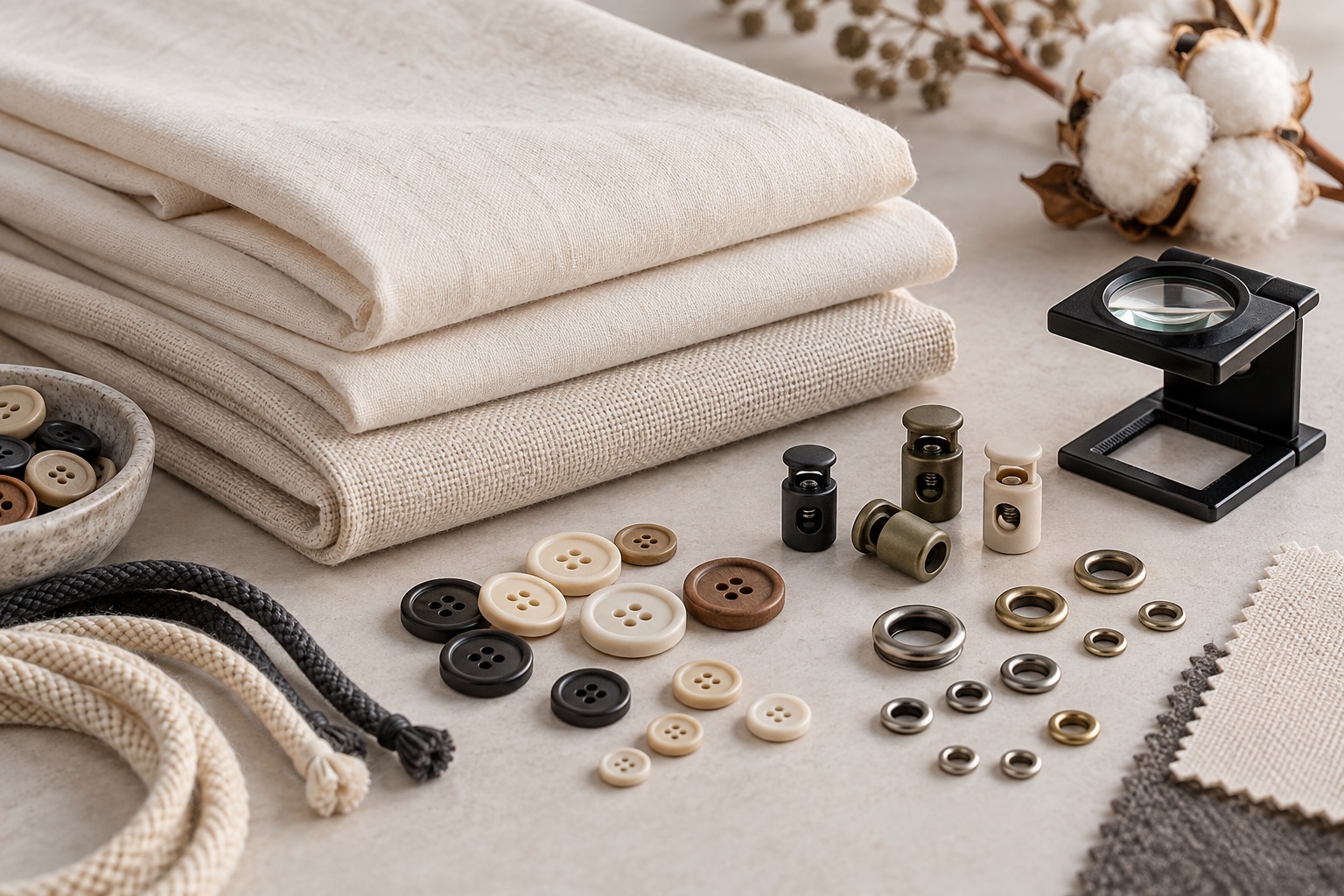
OEKO-TEX STANDARD 100 is a widely used testing and certification system for harmful substances in textiles. An important feature is that it considers components as well as the main fabric.
Accessories are not outside the scope OEKO-TEX states that every thread, button and accessory can be tested against its harmful-substances criteria. Its Buying Guide also lists accessory groups such as buttons, snaps/rivets, buckles/hooks, zippers, tapes, elastics, cords and threads.
Requirements become stricter with greater skin contact STANDARD 100 product classes take intended use and the degree of skin contact into account. Products with more intensive skin contact are subject to stricter human-ecological requirements, so evaluation may differ according to final use.
What can it provide for brands and manufacturers? - A common restricted-substance control language across the supply chain. - Technical documentation support for target-market or customer requirements. - A framework that encourages accessories to be evaluated for chemical compliance as well as appearance.
Certificate verification When an OEKO-TEX certificate is presented, verify its certificate number, scope and validity through the official Label Check system. Certification of one matteerial does not automatteically mean every different product or production lot is covered.
Sources:
- OEKO-TEX STANDARD 100: www.oeko-tex.com
- OEKO-TEX Buying Guide (Accessories): www.oeko-tex.com
Note: Technical content is provided for general information. Current testing and compliance requirements should be verified separately according to the final application, target market and customer standard.