
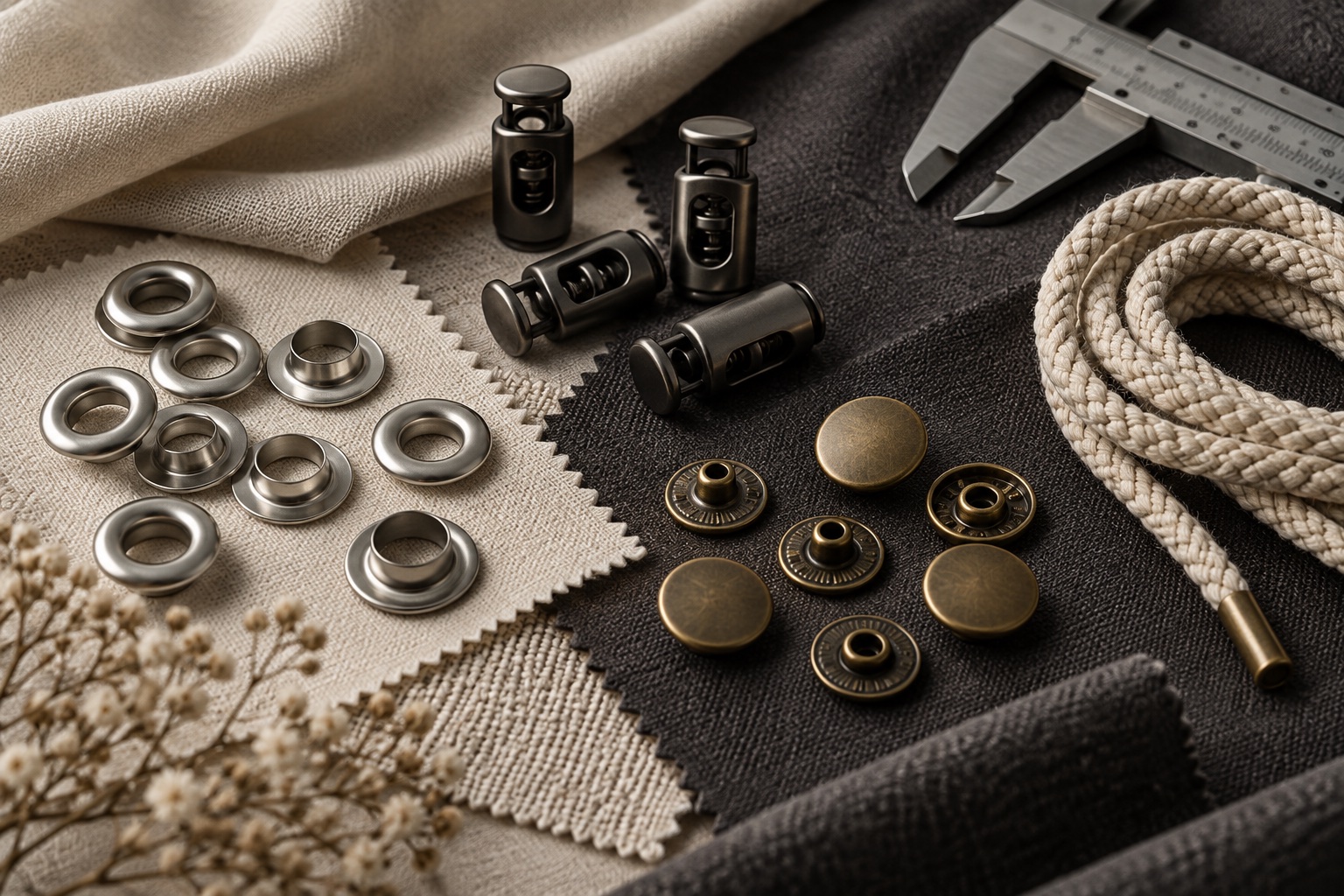
A textile accessory may be a small part of a garment, but it directly affects usability, durability and perceived quality. Selection should therefore consider technical compatibility as well as color and form.
1. Define the end-use scenario Will the accessory be used in sportswear, outerwear, bags or childrenswear? Pulling force, abrasion, moisture, washing and temperature conditions differ by application. The same accessory will not perform identically in every use case.
2. Evaluate cord and passage dimensions together For cord stoppers and eyelets, nominal size alone is not enough. Cord diameter, braid structure, compression and fabric layers should be tested together on a sample. Too much clearance may reduce control; an overly tight fit can increase friction and deformatteion.
3. Choose matteerial according to the product Plastic components can offer low weight, broad color options and design flexibility. Metal components can provide a more premium tactile and visual finish. For metal parts, coating, corrosion resistance and skin-contact requirements should also be considered.
4. Confirm color and finish with a physical sample Screen colors may differ from production. When different matteerials must mattech within one collection, use a physical sample, master color or approved reference.
5. Share washing and care conditions in advance High temperatures, strong alkaline or chemical environments and repeated industrial washing can affect some metals and coatings. Share the intended care instructions with the accessory supplier before mass production.
6. Check compliance and restricted-substance requirements OEKO-TEX STANDARD 100 covers textile components, from yarn to buttons and accessories, for harmful-substance testing. For some metal clothing accessories intended for direct and prolonged skin contact in the European market, REACH nickel-release limits may also be relevant.
7. Approve a sample before mass production A sample lets you verify dimensions, cord compatibility, color, finish and mechanical use on the real product. Keeping the approved sample as the production reference improves lot-to-lot consistency.
Sources and technical references:
- OEKO-TEX STANDARD 100: www.oeko-tex.com
- ECHA REACH Annex XVII – Nickel: www.echa.europa.eu
Note: Technical content is provided for general information. Current testing and compliance requirements should be verified separately according to the final application, target market and customer standard.